
ORIGINAL ARTICLES VOLUME: 20 ISSUE: 1 P: 43-48#43-48 March 2026
Evaluation of Pediatric Measles Cases in Erzurum City Hospital During 2023
Journal of Pediatric Infection • 2026
DOI: 10.5578/ced.20260120
iD Esra Dişçi iD Canan Özlü iD Kamber Kaşali
Received Date: 29.11.2024 Accepted Date: 19.03.2025 Publish Date: 17.03.2026

ABSTRACT

Objective
Measles is a contagious infectious disease that begins acutely with fever and rash. Since there is no effective treatment, protection with vaccination comes to the fore. In this study, we aimed to increase the recognition of measles cases by presenting the demographic and clinical characteristics, follow-up, complications, morbidity and mortality rates of pediatric patients with measles who applied to the Erzurum City Hospital Pediatric Infection Clinic in 2023.
Material and Methods
Hospital records were examined retrospectively. Demographic, clinical and laboratory data of the patients diagnosed with measles were evaluated.
Results
Twenty-two patients were included in the study. Twenty-one of the patients were unvaccinated and one case had two doses of vaccine. Five patients were hospitalized and monitored. Hepatitis was observed in three patients, pneumonia was observed in two patients and diarrhea was observed in one patient.
Conclusion
Measles infection and its complications still a serious problem in our country.

KEYWORDS

Measles, child, maculopapular rash

INTRODUCTION

Measles is a highly contagious infection with humans as its sole host. The causative agent is an enveloped singlestranded RNA virus belonging to the morbillivirus group of the Paramyxoviridae family. The World Health Organization (WHO) recommends that the immunity rate in the community be increased to 95% in order to control the disease, prevent outbreaks, and eliminate the disease (1). However, in recent years, there has been an increase in the number of unvaccinated individuals due to a rise in vaccine hesitancy and irregular migration (2). The measles virus typically spreads in temperate regions in late winter and spring. Disease development rate in susceptible individuals after contact is considered to be 90%. It is accepted that contagiousness begins four days before the onset of rash and continues for four days after the onset of rash (3). The incubation period of the disease is between six and 21 days (average 13 days) (4). The prodromal period is characterized by high fever, followed by a runny nose, cough, conjunctivitis, and maculopapular rash. The rash starts on the scalp and spreads to all extremities, tending to coalesce but not affecting the palms and soles. It resolves with hyperpigmentation after an average of 5-6 days. After measles, lifelong immunity develops (3-4). Measles complications can lead to blindness, encephalitis, severe diarrhea and dehydration, upper respiratory infections, and respiratory distress symptoms, including pneumonia (5). There is no specific treatment for measles; adequate hydration and antipyretic treatment during the febrile period should be provided. The WHO recommends that all children with acute measles receive vitamin A during the infection. Vitamin A supplementation should be given orally once a day for two days. Infants younger than six months should receive 50.000 IU, infants aged 6-12 months should receive 100.000 IU, and children older than 12 months should receive 200.000 IU (5). Since measles is a highly contagious virus, outbreaks and even deaths can occur even in developed countries as a result of declining vaccination rates (1-2). Vaccination is the most effective and definitive solution for protection against the disease. In our country, the increase in the number of cases has been brought under control as a result of intensive immunization and control efforts since 2012 (6). In addition to outbreak control plans organized under the Measles Elimination Program, an additional dose of measles vaccine is recommended for all infants between 9 and 11 months of age, routine measles, mumps, rubella vaccination after the twelfth month, and a booster dose at four years of age (6). In addition to individual protection, the goal is to maintain community immunity above 95% through vaccination to prevent and eliminate epidemic diseases (5). The vaccination rate in our country, which was 98% in 2016, fell to 96% in 2017 and 2018 (7). Measles remains an endemic disease in Türkiye and continues to cause outbreaks every 3-4 years (7). In our province, we observed a significant increase in the number of measles cases in the pediatric age group in 2023. In this study, we aimed to increase awareness of measles cases by presenting the demographic and clinical characteristics, treatments, complications, morbidity, and mortality rates of pediatric patients diagnosed with measles who were followed up at the Erzurum City Hospital Pediatric Infectious Diseases Clinic in 2023

MATERIALS AND METHODS

In our study, the files of 23 pediatric measles cases who applied to the Erzurum City Hospital Pediatric Infectious Diseases Clinic in 2023 were retrospectively reviewed. Children (0-18 years) who met the definition of measles infection in the “Permanent Circular on Measles, Rubella, and Congenital Rubella Syndrome Surveillance” were included in the study (2). Cases clinically under 18 years of age, presenting with high fever and rash, and with positive or intermediate measlesspecific immunoglobulin (Ig) M antibody values were included in the study. Patients without a diagnosis of measles and patients outside the 0-18 age range were not included in the study. Data on the demographic characteristics of the cases, clinical and laboratory findings, treatments received, and complications developed were obtained from patient files and the Ministry of Health measles/rubella case investigation forms. Sex, age, neighborhood of residence, vaccination status, number of days with fever, number of days hospitalized, white blood cell count, absolute neutrophil count, absolute lymphocyte count, hemoglobin level, hematocrit level, platelet count, urea, creatinine, alanine aminotransferase (ALT), aspartate aminotransferase (AST), lactate dehydrogenase (LDH), C-reactive protein (CRP), and measles-specific IgM antibody levels were recorded. The presence of a history of contact with another patient who had a measles infection was noted; if present, household, school, or other environmental contact was recorded. The type of rash on the patients’ skin, the presence of Koplik spots, the presence of conjunctivitis, and the presence of symptoms of respiratory tract infection were evaluated. Data on measles complications such as otitis, pneumonia, diarrhea, sinusitis, meningoencephalitis, crouplike cough, and mortality were noted. The length of hospital stay was recorded. Vitamin A, antibiotics, and antipyretic treatments used in the treatment of measles were recorded. In our study, we administered vitamin A treatment at the appropriate dose to all our patients. Supportive treatment and antimicrobial treatment were used during follow-up in the presence of bacterial complications. Approval for the study was obtained from the Scientific Research Ethics Committee of the Faculty of Medicine, Health Sciences University, with decision number 88 dated 03.04.2024. Patient data were evaluated using the SPSS 22.0 software package. Categorical variables were expressed as percentages, and continuous variables were expressed as mean values ± standard deviation (SD). Categorical variables were expressed as numbers and percentages, and continuous variables were expressed as mean, standard deviation, median, minimum, and maximum. Statistical significance was set at p< 0.05.

RESULTS

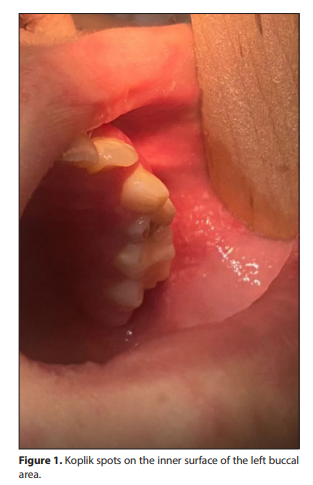
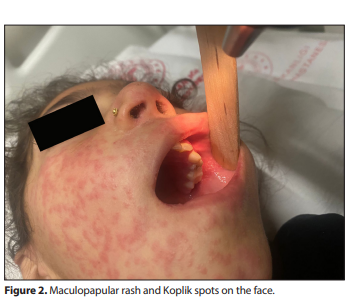
Of the 22 cases included in the study, 13 (59.1%) were male and 9 (40.9%) were female. Eleven (50%) of our cases were aged 1-4 years, and 8 (36.3%) were aged 5-9 years. Twenty-one (95.4%) of our patients were Syrian refugees and had contact with measles patients in the surrounding area. One (4.5%) patient was fully vaccinated, had no history of contact, and had received all vaccinations, including measles, according to the Turkish Ministry of Health’s Childhood Vaccination Schedule. Two (9.5%) of the cases were younger than 12 months and had not received the measles vaccine, while 19 (90.4%) were older than 12 months but had not received any age-appropriate vaccines, including the measles vaccine (Table 1). The symptoms and findings at the time of presentation were: high fever (100%), maculopapular rash (95.5%), sore throat (59.1%), Koplik spots (59.1%), runny nose (54.5%), fatigue/lethargy (50%), conjunctivitis (36.4%), decreased oral intake (28.6%), cough (27.3%), dehydration (18.2%), tachypnea (9.1%), rales/rhonchi on lung auscultation (9.1%), diarrhea (4.5%), and lymphadenitis (4.5%). The most common presenting complaints were high fever and rash (Table 2).Laboratory tests revealed lymphopenia in 3 (13.6%) cases. Biochemical tests showed elevated AST and ALT levels in 3 (23.1%) patients. LDH values were elevated in 22 (100%) patients. CRP (reference value <5 mg/dL) was elevated in 18 (81.8%) cases, with a median value of 8.4 mg/dL (range 3-130). For measles, blood samples sent to the Erzurum Provincial Public Health Laboratory were studied for measles-specific IgM antibodies using the “Enzyme-Linked Immunosorbent Assay (ELISA)” method, and the antibodies were positive in 20 (90.9%) patients and intermediate in 2 (9.1%) patients (Table 3). All patients received vitamin A, and 2 (9%) patients received antibiotic treatment for bronchopneumonia. Of the 22 patients included in the study, 5 (22.7%) were hospitalized in the pediatric infectious disease ward and monitored. In these patients, two had bronchopneumonia as a complication of measles. They presented to the emergency department with rash, fever, and respiratory complaints. Physical examination at the time of presentation revealed bilateral crepitant rales on auscultation, tachypnea, and low saturation. Intravenous antibiotic therapy (sulbactam/ampicillin) was initiated in both patients. All five hospitalized patients had reduced oral intake. Four patients had conjunctivitis and mild dehydration, three had hepatitis, and one had diarrhea. Keratitis, meningoencephalitis, otitis, and tracheitis were not observed. All hospitalized patients were discharged after follow-up with a favorable outcome.

DISCUSSION

The age range in our study group was 7-167 months, with a median age of 44 months. In a study conducted in Ankara in 2012 with 44 measles cases, the age range was 4-191 months, with an average age of 58.6 ± 59.5 months (8). In the 2013-2014 epidemic in Istanbul, the age range was 7-196 months and the mean age was 63.8 ± 44 months in 20 cases (9). Yıldırım et al. reported that the median age of 131 patients in the 2012- 2014 epidemic in İstanbul was 50.5 (2-216) months (10). In 2019, Demir et al. studied 20 measles cases in Diyarbakır, with an age range of 5-214 months and a median age of 11 months (range 8-27) (11). In the study by Tepebaşılı et al., the median value was 5-156 months (12). When the age distribution of the patients in our study was compared with other studies, our study was similar to the study by Tepebaşılı et al. (12). In our study group, there were 13 (59.1%) male and 9 (40.9%) female patients. The male/female ratio was 1.4/1. When we compared male and female patients in our study, we found a significant difference between the sexes (p= 0.049). Metin et al. have reported a male/female ratio of 1.7/1 in 44 measles cases in their study from Ankara, and Türkkan et al. have reported a male/female ratio of 1.5/1 in their study of 20 measles patients from İstanbul (8-9). These ratios were similar to those found in our study. However, it should be kept in mind that in the absence of measles immunization, everyone is susceptible to the disease at any age, regardless of sex. In communities with insufficient measles vaccination coverage, outbreaks are inevitable in the presence of susceptible individuals. In Türkiye, the vaccination rate among children aged 9 months to 6 years was increased to 96.3% in 2005, in line with the WHO’s “Measles Elimination in Europe by 2010” plan (13). The number of measles cases in our country was 7,820 in 2002, but after the vaccination campaign, it decreased to zero cases in 2009 (14). After 2011, a measles outbreak was reported, in which the vast majority of cases occurred in Istanbul and it was thought to originate from imported cases (15). Twenty-one (95.4%) of our cases were Syrian refugees, all of whom were unvaccinated. The number of cases who had contact with a measles patient was 20 (90.9%). Tepebaşılı et al. reported the proportion of unvaccinated patients as 84.7%, while Türkkan et al. reported it as 85% (9,12). In our study, the proportion of unvaccinated patients was 95.2%. In a meta-analysis of cohort studies, the effectiveness of one dose of a measles-containing vaccine in children is 95% [95% confidence interval (CI), 87-98%] after one dose and 96% (95% CI, 71-99%) after two doses (16). Measles outbreaks are mostly seen in unvaccinated individuals. When measles occurs in individuals who have received ≥2 doses of the measles-containing vaccine, it is less severe than in those who have received only one dose or who are unvaccinated (17). Among our cases, we identified the disease in a 14-year-old male patient who had been vaccinated with two doses of the measles vaccine. High fever was the most prominent symptom in all of our cases. This was similar to other studies (8-11). Maculopapular rash was observed in 21 (95.5%) of our patients. The rash started on the face and scalp and spread to the trunk and extremities. Koplik spots were observed in 13 (59.1%) of our cases. However, the incidence of Koplik spots was found to be low in the studies conducted by Demir and Yıldırım and colleagues (10,11). Leukopenia, thrombocytopenia, and T-cell lymphopenia may be observed during measles infection (18,19). In our study, median leukocyte count was 7260 ± 3352/mm3 . Lymphopenia was present in 3 (13.6%) of our cases. No leukopenia or thrombocytopenia was detected in any of our patients. In other studies, leukopenia was detected in 11.2- 73% of the cases, and thrombocytopenia in 33.6-50% of the cases (20,21). Measles-specific IgM antibody begins to rise on the 1st and 2nd days of the rash and can remain in the serum until the 30th to 60th day (22). Similar to our study, Türkkan et al., Metin et al., and Yıldırım et al. have found a 100% positivity rate for measles-specific IgM in their studies of measles patients (8- 10). The most common complications of measles in children are otitis media, bronchopneumonia, croup, and diarrhea, with acute encephalitis causing permanent brain damage occurring at a rate of 0.1%. Deaths can occur at a rate of 0.1- 0.3% as a result of respiratory and neurological complications (17). In our study, we observed poor oral intake in five of the hospitalized cases, pneumonia in two, and diarrhea in one. Two of our hospitalized patients were admitted and treated for bronchopneumonia, and three for malnutrition. All our patients were discharged after recovery. Consistent with the literature, pneumonia constituted the majority of complications (20). Otitis, tracheitis, keratitis, encephalitis, Guillain-Barré syndrome, or death were not observed (23). Since there was no long-term follow-up of the cases, we do not have follow-up data on subacute sclerosing panencephalitis, which is one of the limitations of our study. Considering that the attack rate of the disease is 90%, the importance of early suspicion, early isolation, strict adherence to isolation measures, and contact prophylaxis is clearly evident. Especially in endemic areas, during outbreaks, when individuals, who are younger than 12 months and unvaccinated and who are known to be susceptible, present with respiratory symptoms, fever, and maculopapular rash, questioning and follow-up should be performed thoroughly, and in case of suspicion, the patient should be isolated. We hospitalized and followed up five of our patients. We did not see any measles cases among contacts associated with hospital admission. Furthermore, the presence of Koplik spots in the first migrant patient who presented to the emergency department with fever and rash was very helpful in diagnosing measles and monitoring contacts. With close monitoring of contacts, the outbreak in our province subsided in about three weeks. Figures 1 and 2 show the maculopapular rash and Koplik spots on the face.
REFERENCES

1
World Health Organization (WHO). A monthly summary of the epidemiological data on selected vaccine preventable diseases in the european region: WHO Epi Data. World Health Organization: February. No: 1, 2017. Erişim adresi: https://www.who.int/europe/publications/m/ item/epidata-1-2024 (Erişim tarihi: 06.10.2024).
2
Yildirim DG, Caymaz C, Siraneci R. Evaluation of Demographic Characteristics of Our Pediatric Patients with Measles. İKSSTD 2020;12(3):241- 6.
3
Öcal Demir S, Aksoy Ö, Kubat G, Meşeli S, Yukuş B. 2019 yılında Diyarbakır Çocuk Hastanesinde kızamık tanısı alan 20 çocuk olgunun irdelenmesi. J Pediatr Inf 2020;14(3):141-5. https://doi.org/10.5578/ ced.69292
4
Tepebaşılı İ, Çaksen H, Odabaş D, Köse D. Kızamık, Doğu Anadolu bölgesinde hala ciddi bir sorun. Van Tıp Dergisi 2003;10(3):69-71.
5
Centers for Disease Control and Prevention. Progress toward Measles elimination-European region, 2005- 2008. MMWR Morb Mortal Wkly Rep 2009;58(06):142-5.
6
T.C. Sağlık Bakanlığı. Sağlık Bakanlığı Sağlık İstatistikleri Yıllığı 2013. Ankara 2014.
7
Kalaycioglu AT, Baykal A, Guldemir D, et al. Molecular characterization of measles viruses in Turkey (2010-2011): first report of genotype D9 involved in an outbreak in 2011. J Med Virol 2013;85(12):2128-35. https:// doi.org/10.1002/jmv.23714
8
Pietrantonj C, Rivetti A, Marchione P, Debalini MG, Demicheli V. Vaccines for measles, mumps, rubella, and varicella in children. Cochrane Database Syst Rev 2021;11:CD004407.
9
Cherry JD, Zahn M. Clinical Characteristics of Measles in Previously Vaccinated and Unvaccinated Patients in California. Clin Infect Dis 2018;67:1315.
10
Cherry JD. Measlesvirus. In: Cherry JD, Harrison GJ, Kaplan SL, Steinbach WJ, Hotez PJ (eds). Feigin&Cherry‘s Textbook of PediatricInfectious Disease. 7th ed. Philadelphia: Elsevier Saunders, 2014:2373-94.
11
Hatipoğlu N, Hatipoğlu H, Kuzdan C, Şanlı K, Engerek N, Şiraneci R. Kızamık. JOPP Derg 2013;5(3):105-13. https://doi.org/10.5222/ JOPP.2013.105
12
T.C. Sağlık Bakanlığı. Kızamık, kızamıkçık ve konjenital kızamıkçık (KKS) sürveyansı genelgesi 2010. Erişim adresi: https://www.saglik.gov.tr/ TR-11146/kizamik-kizamikcik-ve-konjenital-kizamikcik-kks-surveyansi-genelgesi-2010.html (Erişim tarihi: 01.11.2024).
13
Gershon AA. Measlesvirus (Rubeola). In: Bennett JE, Dolin R, Blaster MJ (eds). Mandell, Douglas andBennet’sPrinciplesandPractice of InfectiousDiseases. 8th ed. Philadelphia: Elsevier Saunders, 2015:1967-73. https://doi.org/10.1016/B978-1-4557-4801-3.00162-4
14
Corbin V, Beytout J, Auclair C, chambon M, Mouly D, Chamoux A, et al. Shift of the 2009-2011 measlesoutbreakfromchildrentoadults: an observationalreview at the University Hospital of Clermont-Ferrand, France. Infection 2013;4:1157-61. https://doi.org/10.1007/s15010-013- 0485-0
15
Rota PA, Moss WJ, Takeda M, de Swart RL, Thompson KM, Goodson JL. Measles. Nat Rev Dis Primers 2016;2:16049. https://doi.org/10.1038/ nrdp.2016.49
16
American Academy of Pediatrics. Measles. In: Kimberlin DW, Brady MT, Jackson MA, Long SS, (eds). RedBook: 2018-2021 Report of the Committee on InfectiousDiseases. 31st ed. American Academy of Pediatrics, Itasca, IL. 2018:537-50.
17
Gans H, Maldonado YA. Measles: clinical manifestations, diagnosis, treatment, andprevention. In: Hirsch MS, Kaplan SL (eds). UpToDate: last update 26.10.2019.
18
Richardson M, Elliman D, Maguire H, Simpson J, Nicoll A. Evidence base of incubation periods, periods of infectiousness and exclusion policies for the control of communicable diseases in schools and preschools. Pediatr Infect Dis J 2001;20:380. https://doi.org/10.1097/00006454- 200104000-00004
19
World Health Organization (WHO). Int measles fact sheet. Erişim adresi: http://who.int/mediacentre/factsheets/fs/286/en/, Updated November 2014.
20
T.C. Sağlık Bakanlığı. Türkiye Halk Sağlığı Genel Müdürlüğü, kızamık, eliminasyon, bakanlık oluru 2019. Erişim adresi: https://hsgm.saglik. gov.tr/depo/Mevzuat/Genel_Nitelikli_Yazi_ve_Gorusler/Kizamik_ Eliminasyon_Programi.pdf (Erişim tarihi: 14.11.2019).
21
T.C. Sağlık Bakanlığı Sağlık Bilgi Sistemleri Genel Müdürlüğü. Sağlık ıstatistikleri yıllığı 2017 Haber Bülteni, 2018.
22
Metin Ö, Tanır G, Öz FN, Kalaycıoğlu A, Yolbakan S, Tuygun N, et al. Evaluation of 44 pediatric measles cases detection in Ankara, Turkey during 2012-2013 epidemic and moleculer characterization of the viruses obtained from two cases. Mikrobiyol Bul 2014;48:256-70. https:// doi.org/10.5578/mb.7024
23
Türkkan ÖN, Önal ZE, Sağ Ç, Akıcı N, Gürbüz T, Nuhoğlu Ç. Kızamık olgularımızın demografik özellikleri, hastalığın morbidite ve mortalitesinin değerlendirilmesi. Haydarpasa Numune Med J 2017;57:83-8. https://doi.org/10.14744/hnhj.2017.66376